
How to Test If Fish Is Fresh
Fresh fish should smell of the sea, not of fish. Learn the three quick senses — smell, touch and eyes — that tell you in seconds whether a fillet or whole fish is worth buying.
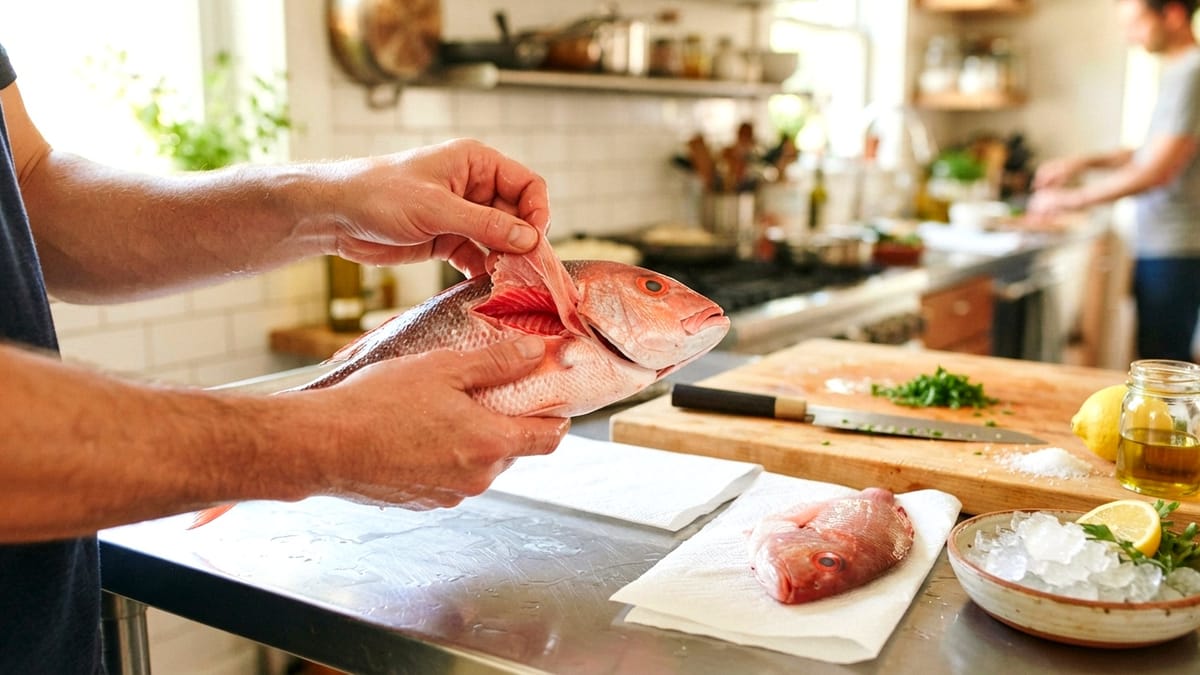
Fresh fish should smell of the sea, not of fish. Learn the three quick senses — smell, touch and eyes — that tell you in seconds whether a fillet or whole fish is worth buying.
What you need
- your nose
- clean hands
- paper towel
Method
- Bring the fish close to your nose and inhale just above the surface: fresh fish smells faintly of seawater or cucumber, while old fish smells sharp, ammonia-like or sour.
- Press a fingertip firmly into the thickest part of the flesh — it should feel firm and springy, and the dent should fill back in within a second or two.
- Pat the surface with a paper towel and look at it: fresh fish leaves the towel barely damp and clean, while fish past its best leaves a milky, sticky residue.
- Check the eyes on a whole fish — they should bulge slightly and be glossy black with a clear pupil, not sunken, cloudy or grey.
- Lift the gill flap and look underneath: gills should be bright pink to red and smell clean, never dull brown or slimy green.
- Run a finger along the belly and skin — the flesh should feel smooth and slightly wet, not tacky or stringy where it is starting to break down.
Why it works
Fish spoils fast because its oils and proteins break down into ammonia and other compounds the moment it leaves the water, so freshness is really a measure of how little that decay has begun.
Common mistakes
- Judging freshness by the sell-by date on the label instead of your own nose and touch.
- Rinsing the fish under the tap first, which washes away the smell clues you need to assess.
- Assuming a strong fishy smell is normal for all fish, when really it means the fish is old.
Put it to work: Cantonese Steamed Fish with Ginger and Spring Onion, Miso-Butter Salmon Rice Bowl, Singaporean Chilli Prawns