
How to Salt-Trim and Rest Meat Before Cooking
Salting meat ahead pulls moisture out and then back in, seasoning the inside and improving the crust, while a short rest settles juices so they stay in the meat instead of running onto the board.
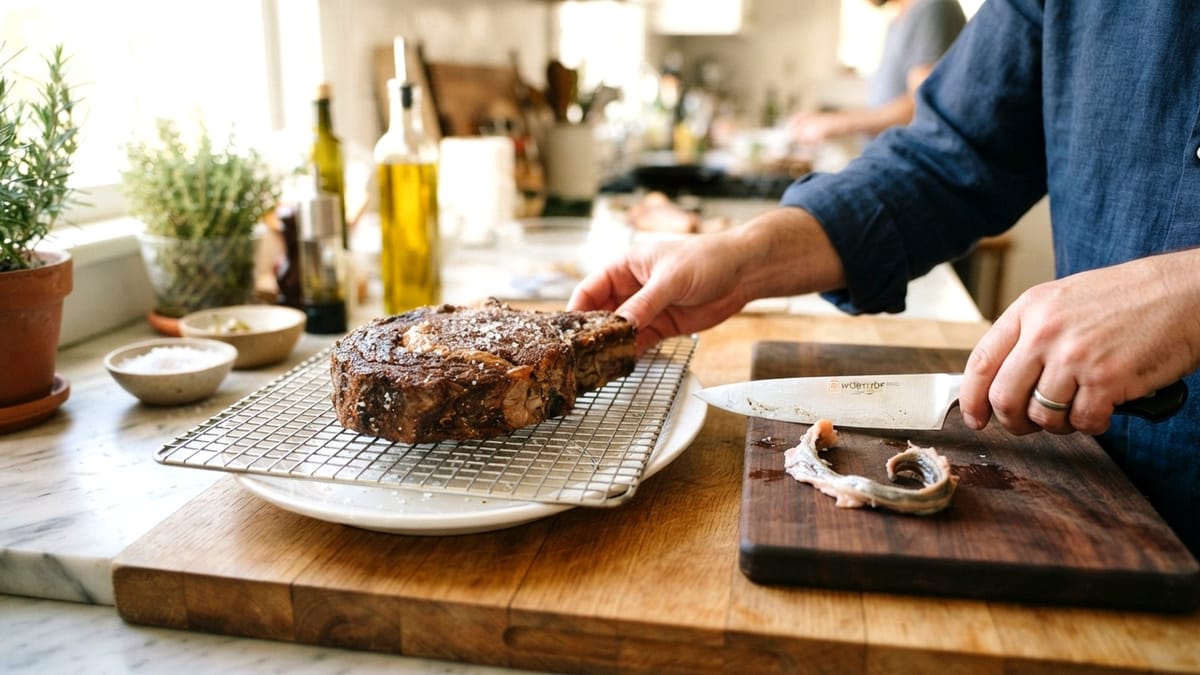
Salting meat ahead pulls moisture out and then back in, seasoning the inside and improving the crust, while a short rest settles juices so they stay in the meat instead of running onto the board.
What you need
- Chef's knife and cutting board
- Kitchen paper towels
- A plate or rack
- Clingfilm (optional)
Method
- Blot the meat dry with kitchen paper, pressing against the surface until no damp patch remains; dry meat browns, wet meat steams.
- Trim away silver skin, sinew and any thick plugs of hard fat that would not render, angling the blade just above the meat so you only shave the unwanted layer.
- Sprinkle fine or kosher salt over both sides from about twenty centimetres up, then press the grains in with your fingertips; use more salt than feels comfortable — about three-quarters of a teaspoon per large steak — since much of it will draw liquid away before it enters.
- Leave the salted meat uncovered on a rack in the fridge for at least forty minutes and up to a day; watch the surface go tacky and dry, which is exactly what you want, then pat away residual moisture before cooking.
- Take the meat out twenty minutes before cooking so the centre is not refrigerator-cold, and let it sit uncovered; the surface will feel cool but not wet.
- Rest the cooked meat on a warm plate for at least five minutes before slicing, pouring the juices that pool back over the meat — the meat should slacken under the fork and the ends stay pink.
Why it works
Salt initially leaches water out, then dissolves into it and works back into the muscle by osmosis, seasoning it deeply and helping the protein hold moisture. Resting lets the muscle fibres relax so their juice remains inside when you cut.
Common mistakes
- Salting minutes before cooking, which is too late to season and only draws moisture to the surface.
- Trimming right down to bare meat and losing the fat that protects against a tough, dry crust.
- Slicing as soon as it comes off the heat so the juices flood the board instead of staying in the meat.
Put it to work: Sous Vide Grill Steak, Beef and Broccoli Stir-Fry, Korean Beef Bowl (Bulgogi-Style)