
How to Separate an Egg Yolk from the White
Separating an egg neatly keeps the white clean for whipping and the yolk intact for enriching sauces, custards and marinades. A calm hand and cold eggs make it quick with nothing but the shell or your fingers.
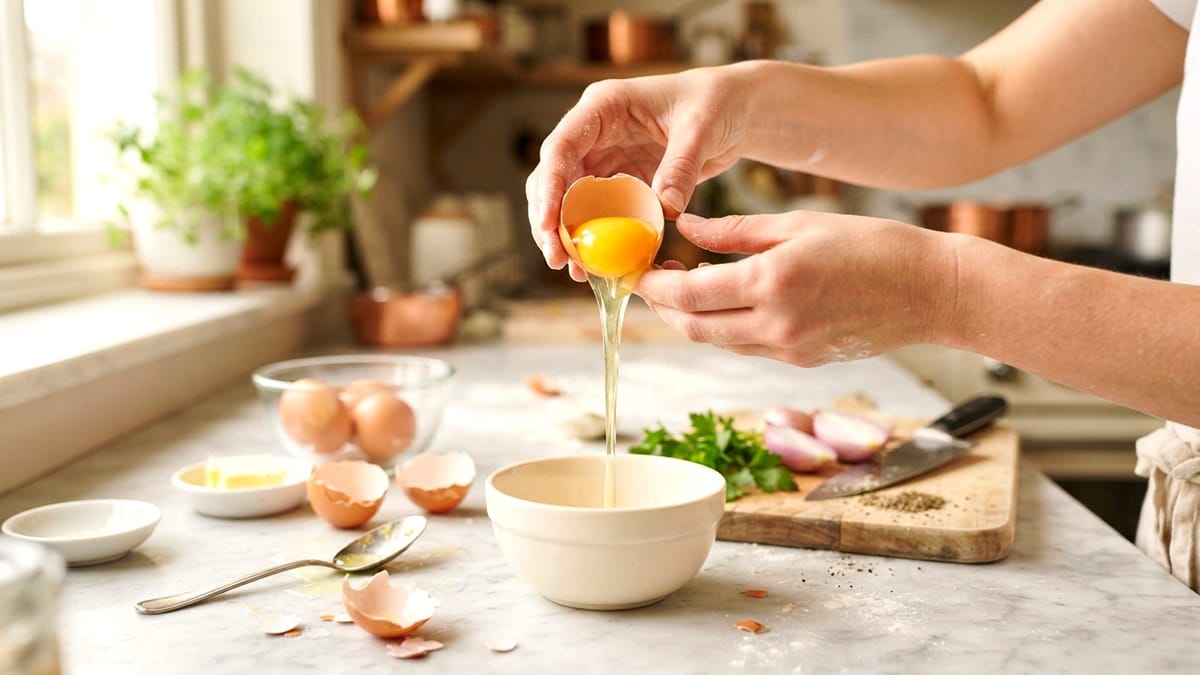
Separating an egg neatly keeps the white clean for whipping and the yolk intact for enriching sauces, custards and marinades. A calm hand and cold eggs make it quick with nothing but the shell or your fingers.
What you need
- Two small bowls
- A third bowl or cup
- Your clean hands or a slotted spoon
Method
- Chill the eggs in the fridge first; cold whites are thicker and cling to the yolk less, so cracks run cleanly.
- Tap the egg firmly on a flat surface near the middle of the shell to make one decisive crack rather than a starburst of small fractures.
- Hold the egg over a small bowl and pull the two halves apart slowly, keeping the yolk in the lower half; most of the white will slip out.
- Pass the yolk back and forth between the shell halves three or four times, letting the white drain into the bowl, until nothing more drips off.
- Slide the yolk into a second bowl and set the whites aside; pour each egg's white into the main white bowl only once you have checked it, so a broken yolk never contaminates the batch.
- Feel the yolk roll loosely between your fingers; a clean separation has no slippery white left coating it.
Why it works
Egg white is almost all water and protein, so even a trace of fat from the yolk stops it frothing properly. Keeping the two apart from the start protects the white's whipping ability and the yolk's richness.
Common mistakes
- Cracking the egg on the bowl edge, which drives shell fragments into the white.
- Using the shell halves on a yolk whose membrane has already pierced, leaking yellow into the white.
- Separating over a bowl that already holds other whites, so one bad egg spoils the lot.
Put it to work: Japanese Okonomiyaki (Savoury Pancake), Chicken Katsu Curry